
A 10-Minute Practice for the Season Ahead
Practice: Steadying Through the Seasonal Shift
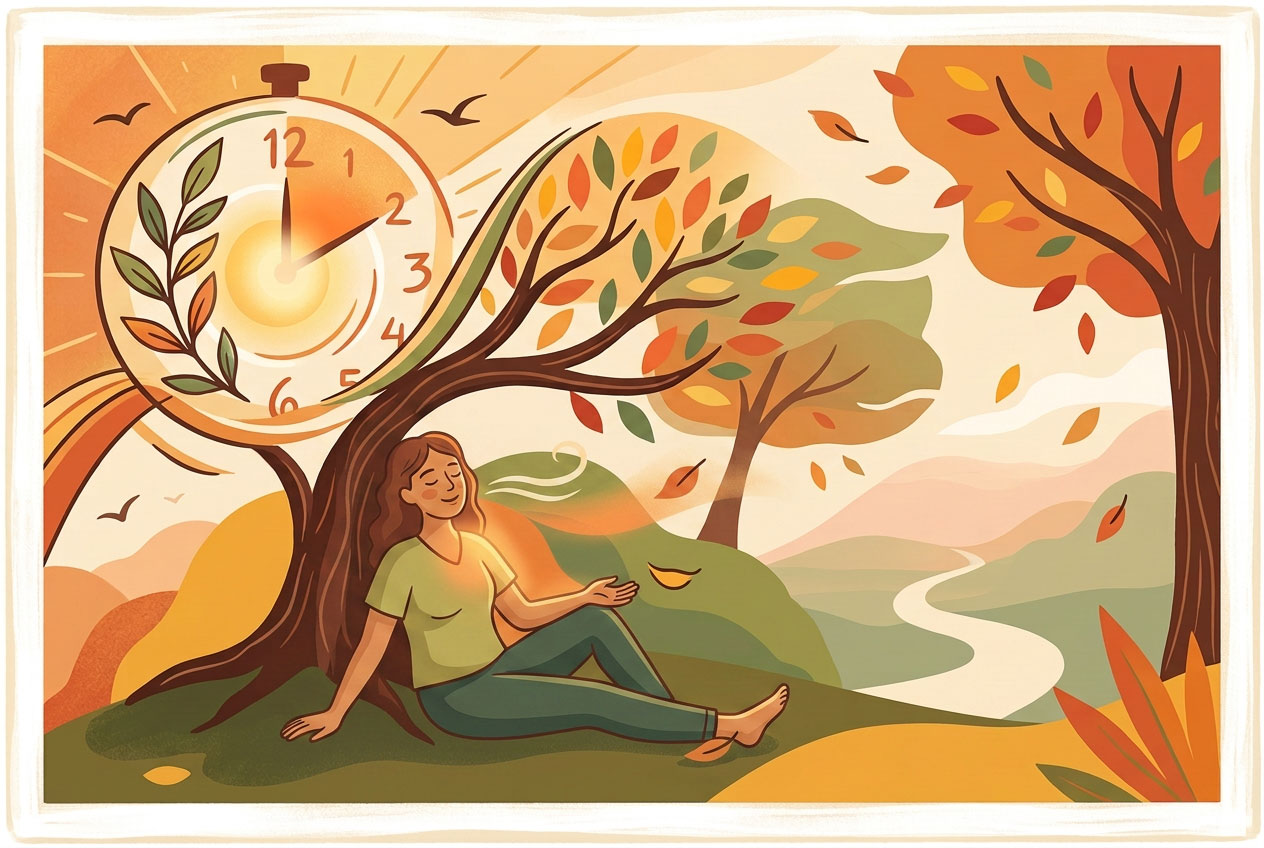
Seasonal changes affect anxiety more than most people realize. As summer gives way to fall and winter, shifts in daylight, sleep, temperature, routines, and time outdoors can all influence mood and the body’s stress response. It’s a real physiological pattern — and one that responds well to a few specific, practiced approaches.
Three commitments matter here: Stay Calm, Stay Connected, and Stay the Course. The first two show up directly in the practices below. The third is what carries last month’s practice forward: SEE, THINK, and LEAD only work if you keep making those moves, meeting after meeting — especially in a week when they don’t seem to be landing. These approaches are well-established and proven to work, and the people who benefit most are those who stay with them.
A Few Approaches That Help
- Keep your sleep schedule consistent. Go to bed and wake up at roughly the same time every day. Sleep disruption can amplify anxiety.
- Get daylight early in the day. Twenty to thirty minutes of outdoor time in the morning helps regulate your body clock and mood, especially as daylight decreases.
- Exercise regularly. Walking, swimming, cycling, or other moderate movement most days reduces physical tension and improves sleep.
- Maintain your routines. Seasonal transitions can disrupt meals, exercise, social activity, and hobbies. Predictability has a calming effect.
- Stay connected with people. (Stay Connected) It’s easy to drift toward isolation as days shorten. Deliberately scheduling enjoyable social contact counters that pull.
- Use a simple calming technique. (Stay Calm) Slow breathing — in for about 4 seconds, out for about 6 — for five minutes lowers the body’s physiological arousal.
- Watch caffeine and alcohol. Both can worsen anxiety and interfere with restorative sleep, especially when you’re already feeling unsettled.
- Notice the pattern. For a few weeks, track your anxiety level, sleep, exercise, daylight exposure, and major stresses. A predictable seasonal pattern often emerges — [tie back to last month’s post here].
10-Minute Daily Routine for Seasonal Anxiety
Leaders are often quick to regulate everyone else’s anxiety while paying little attention to their own — overfunctioning for the team, underfunctioning toward self. This routine flips that ratio in ten minutes.
- Minutes 1–2 — Slow your breathing. Sit comfortably, relax your shoulders, and breathe gently through your nose for about 4 seconds, then exhale for about 6. No need to force a deep breath. Continue for two minutes.
- Minutes 3–5 — Get grounded. Shift attention from anxious thoughts to what’s actually happening around you. Identify 5 things you can see, 4 you can feel, 3 you can hear, 2 you can smell, and 1 you’re grateful for.
- Minutes 6–8 — Move. Stand up and move — walk around the house, stretch, do a few gentle squats, or step outside for a few minutes. Timing this with morning daylight makes it more effective.
- Minutes 9–10 — Set your direction. Ask three questions:
- What am I concerned about today?
- Is there something practical I can do about it?
- What’s one good thing I want to do today?
Choose one small, doable action and let curiosity carry you into the rest of the day.
Bonus habit: A 20–30 minute outdoor walk most days, earlier rather than later, combines daylight, movement, a change of scenery, and a break from repetitive thinking — and it makes everything above considerably more effective.
The goal is a settled nervous system and the ability to choose how you spend the rest of your day, regardless of what anxiety is doing in the background.
When to Get Additional Support
If anxiety becomes persistent, interferes with sleep or daily activities, or comes with significant depression, it’s worth bringing to a physician or mental health professional. Cognitive behavioral therapy (CBT) is particularly well established for anxiety, and if symptoms reliably surface during darker months, a clinician can help assess whether seasonal affective disorder (SAD) or another seasonal pattern is involved.
We’ll be back next month with another practice you can put to use right away. Keep an eye on your inbox — and until then, stay calm, stay the course, and stay connected. Our monthly Practice Forums are 45-minute discussions where we work through how these practices play out in real team dynamics.
Click below to join our discussion group!
https://www.resilientleadershipdevelopment.com/45-minute-practice-forum-registration/
This month’s session will be Friday, September 4th @ 12:00 PM EST.
→ Explore the RL Coach Certification Program if you’re ready to bring this framework to other leaders. https://www.resilientleadershipdevelopment.com/resilient-leadership-coach-certification-program/
Article Contributors

RL Trainer, John Moyer contributed to this article.
As a 30+ year veteran of education, John has trained and coached both student and adult leaders. Through his work primarily in education, John has helped leaders of all ages discover that leadership is influence- which starts with the leader becoming a less anxious presence. Email John

Robert Wilkins, contributed to this article.
As a 35-year veteran of website design, development, and content creation, Robert brings that same discipline to his work at RLD. A long-time practitioner of Resilient Leadership principles himself, he's seen firsthand how the model shapes not just leadership, but the everyday work of building and communicating. Email Robert.