|
November Practice of the Month
Bring a Calmer Presence to the Table
|
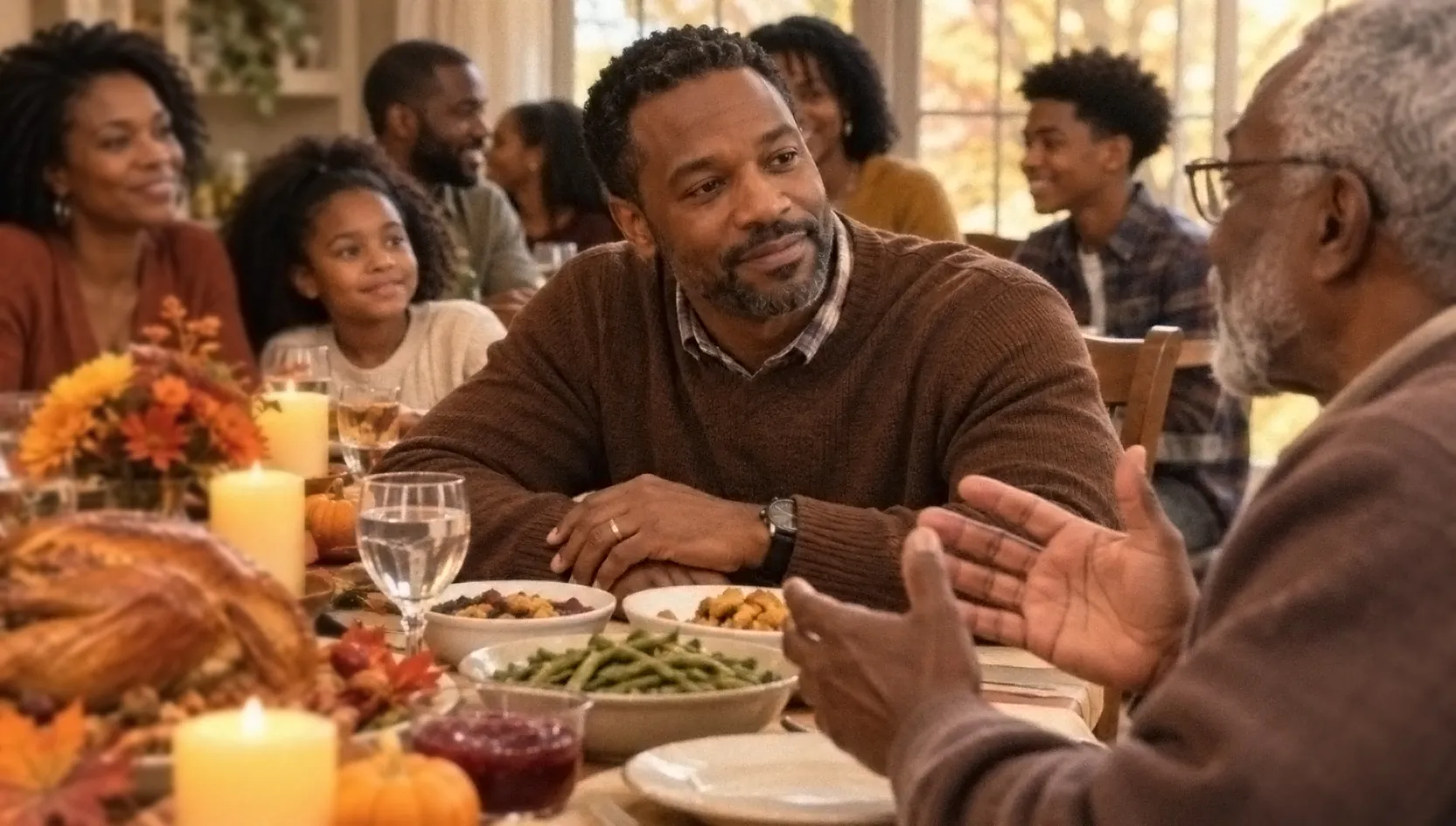
The turkey is carved, the side dishes are on their second lap, and then a relative says it: a pointed comment about your work, your choices, or the news. Your face warms. A sharp reply is already loading. Across the table, someone tenses up, and someone else is quietly recruiting allies with a glance.
Most of us know this moment, at the holiday table and in the conference room. Thanksgiving invites us to recognize the people and relationships we’re grateful for. It also brings packed schedules, high expectations, and pressure to make everything go “just right.” Even joyful occasions can become emotionally charged.
|
Anxiety travels through the room
Resilient Leadership teaches that anxiety moves through relationship systems. When tension rises, we tend to react: correcting others, withdrawing, taking sides, or working harder to control the outcome. The emotional tone we bring into a room can turn that anxiety up, or help bring it down.
A central RL practice is to be a step-down transformer: notice the anxiety around you, recognize your own reaction, and respond with a calmer, more thoughtful presence. You still feel what you feel, and you can still address hard issues. Your response simply comes from your values instead of from the intensity of the moment.
|
Where gratitude comes in
Gratitude supports this work. When we deliberately notice what we value in another person, our view widens beyond the irritation in front of us. We can appreciate someone’s contribution without idealizing them, and we can stay connected without needing agreement.
That is differentiation of self in action: the ability to separate thinking from feeling. You notice the feeling (I’m irritated), then you let your thinking choose the response (I value his loyalty, and I can tell him I see it differently). Gratitude gives your thinking a steadier place to stand.
So back at the table, the calmer response starts with noticing the impulse to correct, defend, or disengage. Then you remember what you value about the person, listen with curiosity, and decide whether and how to speak. You’re still fully yourself, and the anxiety in the room has far less say in what you do.
|
Try it this month
Choose one of these four practices each day, especially when a relationship feels strained.
|
1
|
Check your emotional temperature. Before a meeting, meal, or difficult conversation, ask: What am I feeling? What am I tempted to do? Am I managing myself, or trying to manage everyone else? Take a slow breath, relax your shoulders, and pick one calm action. |
|
2
|
Name specific gratitude. Each day, tell one person what you appreciate, with a specific action and its impact: “I appreciated the way you listened yesterday. It helped me think more clearly.” Offer it freely, with no strings attached. |
|
3
|
Trade judgment for curiosity. When someone disappoints or irritates you, notice the story you’re telling yourself about their motives. Ask a real question before you draw a conclusion. |
|
4
|
Stay connected and stay yourself. Listen respectfully to a view you don’t share. “I see that differently” is enough; there’s no need to argue to win. Skip the distancing, the rescuing, and the recruiting of allies. |
|
|
A Thanksgiving Experiment
Calm. Curious. Appreciative. Connected.
Pick one gathering or conversation this month. Beforehand, name the person or situation most likely to stir your anxiety, and decide how you want to show up. During it, check your emotional temperature. Afterward, reflect on what shifted in you.
|
|
Reflect at the end of the week
- When did I become reactive, and what set it off?
- Did I express appreciation freely, or was I hoping to change someone’s behavior?
- Where did I stay connected while holding onto my own convictions?
- What did I learn about the effect of my presence on others?
- What is one small adjustment I want to practice next week?
|
|
This Thanksgiving, one of the most meaningful gifts you can bring to the table is a calm, thoughtful, grateful, and connected presence.
|
|
Hit reply and tell us which practice you’re trying first. We read every response.
|
|
|
RL Trainer, John Moyer contributed to this article.
As a 30+ year veteran of education, John has trained and coached both student and adult leaders. Through his work primarily in education, John has helped leaders of all ages discover that leadership is influence, which starts with the leader becoming a less anxious presence. Email John
|
|
Bob Wilkins contributed to this article.
As a 35-year veteran of website design, development, and content creation, Bob brings that same discipline to his work at RLD. A long-time practitioner of Resilient Leadership principles himself, he’s seen firsthand how the model shapes leadership and the everyday work of building and communicating.
|
|